
How Does Where Is My Train Work Without Internet? The Technology Explained
Imagine you are travelling on an Indian train. You have entered a remote area, your mobile internet has stopped working, and GPS is unavailable. You open the Where Is My Train app, and surprisingly, it can still help you identify your train’s location.
Sounds impossible? Not really.
Most people assume that tracking a train requires a continuous internet connection and GPS. However, Where Is My Train uses a different approach: its official app listing says that train location detection can work without internet or GPS by using information from nearby mobile towers. The app also stores Indian Railways timetable information on the phone for offline access.
So, how does this technology work? How can a mobile phone estimate a train’s location without traditional GPS navigation? And is the information always accurate?
Let’s break down the technology in simple terms.
Table of Contents
What Is the Where Is My Train App?
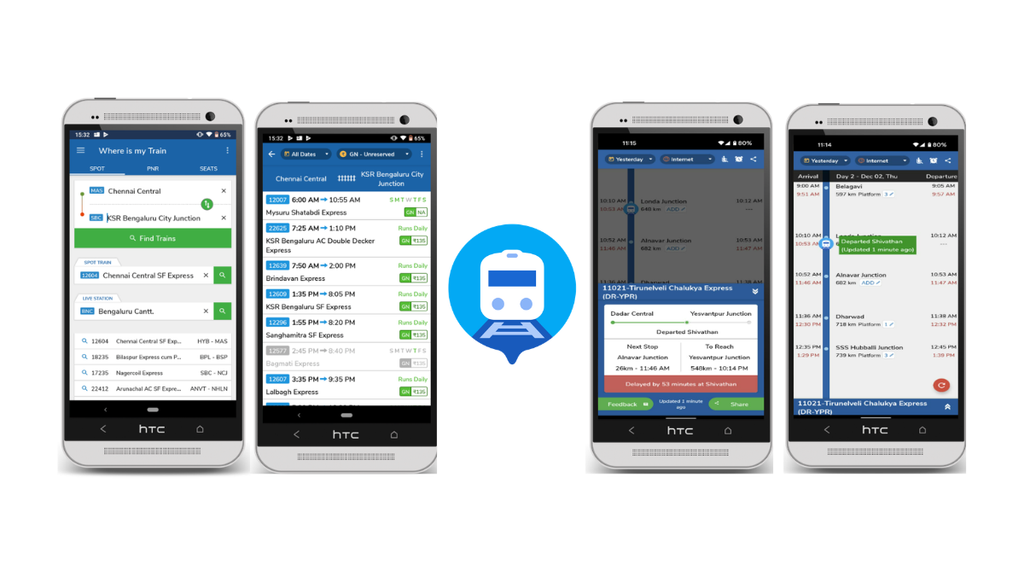
Where Is My Train is a train information and tracking app designed to help passengers check train running status, timetables and other journey details.
Instead of relying entirely on a continuous internet connection, the app offers selected features that work offline. These include access to stored train schedules and a train-location feature that can use mobile tower information during a journey.
The app also offers features such as destination alarms, a speedometer, coach-position information and platform details where available. PNR status and seat availability are accessed through the official Indian Railways website, so those services may require an internet connection.
You can find the app on the official Google Play listing.
The interesting part is not just that the app works offline. It is how it combines information already stored on your phone with signals from the mobile network.
How Does Where Is My Train Work Without Internet?
The simplest explanation is that the app does not need to download every piece of information from the internet each time you open it.
It can use two important sources of information:
- Offline timetable data: Train schedules and route information stored locally on your device.
- Mobile tower information: Information from nearby cellular network towers that can help estimate your location while travelling.
According to the app’s official description, its train-location feature can work without internet or GPS by using cell tower information.
However, the exact internal algorithm used to calculate the displayed location is not fully documented publicly. Therefore, it would be inaccurate to claim that we know every technical step the app performs behind the scenes.
To understand the principle, let’s look at each part separately.
1. The App Stores Train Timetables on Your Phone
Normally, many apps retrieve information from online servers whenever you request it. If the internet connection disappears, the app may not be able to load fresh information.
Where Is My Train handles its timetable differently. Its official listing confirms that Indian Railways timetable information is available offline.
Think of this stored information as a digital railway timetable.
It can contain details such as:
- Train routes and station sequences
- Scheduled arrival and departure times
- The order in which stations appear along a route
- Information needed to display the journey in the app
Because this information is stored on the phone, the app can display supported timetable details without downloading the entire schedule again.
A simple example
Suppose your train follows this route:
Delhi → Mathura → Agra Cantt → Gwalior → Jhansi
If the relevant timetable information is already stored on your phone, the app can show the planned route even when your internet connection is unavailable.
But there is an important distinction: a timetable tells the app where a train is scheduled to go, not necessarily where it is right now.
To estimate the train’s current position, the app needs additional information.
2. How Mobile Towers Help Locate Your Train
This is the most interesting part of the technology.
Your mobile phone communicates with cellular network infrastructure to maintain mobile connectivity. Even when you cannot browse websites or use online apps, your phone may still detect or communicate with nearby cellular towers.
Each tower serves a particular geographical area. Depending on network conditions and the phone’s connection, cellular information can help provide clues about the phone’s approximate location.
For example, imagine your phone is travelling along a railway route and its cellular environment changes as the train moves.
At one point, it may detect or connect through one set of towers. Further along the journey, the available tower information may change.
That changing information can help a location system estimate where the phone is travelling.
Does the app need mobile internet for this?
Not necessarily.
Mobile network connectivity and mobile internet are not the same thing.
Your phone may be able to interact with cellular network infrastructure even when mobile data is switched off or no internet service is available. This is the basic distinction that makes the app’s offline location feature possible.
The app’s official description confirms that it can use cell tower information to find the train’s location without internet or GPS.
However, cellular information does not automatically reveal an exact railway coordinate. The precision depends on the available network information and the location method used by the app.
3. Mobile Tower Tracking vs GPS: What Is the Difference?
GPS and cellular location are two different ways of estimating where a device is located.
GPS location
GPS-based positioning uses signals from navigation satellites received by your phone to calculate its position.
It can provide accurate location information when the phone receives sufficient satellite signals. However, GPS performance can be affected by obstructions, such as tunnels, buildings and certain enclosed environments.
GPS itself does not require mobile internet to calculate a position, although some apps use internet data to download maps or additional information.
Mobile tower-based location
Cellular location uses information associated with nearby mobile network towers and the phone’s cellular environment.
Depending on the method and available information, this may provide an approximate location rather than a precise coordinate.
Its usefulness is that it can work in situations where a location feature does not rely on GPS.
| Feature | GPS-based positioning | Mobile tower-based positioning |
|---|---|---|
| Main source | Satellite signals | Cellular network information |
| Requires mobile internet for positioning itself? | No | Not necessarily |
| Typical precision | Often more precise in suitable conditions | Can be less precise and highly variable |
| Main limitations | Obstructions and weak satellite reception | Tower coverage, tower density and available network information |
| Useful for | Navigation and location tracking | Approximate location when supported by cellular information |
Neither method guarantees perfect results in every situation.
4. How Can the App Estimate Which Station Is Next?
Let’s use a simple example.
Suppose you are travelling from Delhi to Jhansi, and your planned route includes Mathura, Agra Cantt and Gwalior.
The app has access to the relevant timetable stored on your phone. It can use the route and scheduled station sequence to understand which stations come before and after your current journey point.
Meanwhile, the location feature can use available mobile tower information to help estimate where you are along the route.
Combining route information with a location estimate can help the app present useful journey details, such as your approximate position and upcoming stations.
Here is the simplified concept:
Stored train route + location estimate + station sequence = useful journey information
This is a conceptual explanation, not a confirmed description of the app’s proprietary source code. The developer has not publicly documented every calculation used to generate each displayed result.
Does this mean the app knows the exact railway track?
Not necessarily.
An estimated phone location and the precise position of a train on a railway track are not identical things. The phone may be inside a moving train, and the available location information may only narrow down the approximate area.
That is why it is better to treat the displayed position as a helpful travel estimate rather than a guarantee of exact track-level positioning.
5. How Does It Work When There Is No Internet and No GPS?
Let’s separate the two situations.
Situation A: No internet, but cellular signals are available
Your phone may still obtain cellular information even if mobile data is unavailable. The app can use supported offline timetable data and cellular information to help estimate your train’s location.
This is the situation in which the offline tracking feature can be particularly useful.
Situation B: No internet and no usable cellular information
Now imagine that your train enters an area where your phone cannot obtain useful information from nearby mobile towers.
The app may still be able to show the timetable already stored on your device. However, without GPS or useful cellular location information, it cannot be assumed that the app will continue updating your actual position accurately.
In other words, offline timetable access is not the same as continuously knowing your live location.
If all usable location sources are unavailable, a stored timetable alone cannot tell whether your train is running late, has stopped unexpectedly or is moving faster than scheduled.
This is an important limitation to understand before relying on any train-tracking app.
6. Does Where Is My Train Work in Airplane Mode?
Airplane mode disables cellular connections by default on many phones, although some wireless features can be enabled again manually.
If airplane mode prevents your phone from obtaining the cellular information required by the app, its tower-based location feature may not work as expected.
GPS reception may still be possible on some phones in airplane mode, but that does not mean every feature of the app will work automatically.
You may still be able to access timetable information that is already stored on your phone. Actual location updates depend on which location sources remain available and how the app supports them.
So, if your goal is to use the app’s cellular-based offline tracking, do not assume that enabling airplane mode will provide the same experience as simply losing mobile internet.
7. Is Where Is My Train Always Accurate?
No. Like other location-based tools, its performance can vary.
The app can be useful, but several factors may affect what you see on the screen.
Mobile tower coverage
Cellular coverage differs between cities, villages, remote areas and railway corridors. The amount of useful location information available from nearby towers can also vary.
Tunnels and remote stretches
In some locations, your phone may struggle to obtain useful cellular information. This can reduce the availability or freshness of location estimates.
Train delays and unexpected stops
A timetable describes the planned journey. If a train is delayed, diverted or held between stations, the planned schedule alone cannot reveal the exact current situation.
Stale or outdated information
Offline data cannot automatically receive every new update while the device is disconnected. Timetable changes and other information may need an internet connection to refresh.
Location-estimation limitations
A mobile tower does not necessarily identify one exact point on a railway line. Depending on the available information, the estimated location may be less precise than GPS under good conditions.
Practical tip: Use the app as a travel aid, but verify important platform, departure and arrival information through station announcements, display boards or official railway sources.
8. Which Features Work Offline, and Which May Need Internet?
Not every feature in a train app works in the same way.
| Feature | Offline availability |
|---|---|
| Previously stored train timetable | Yes, supported timetable information can be viewed offline |
| Train-location feature | Can work without internet or GPS using cell tower information, subject to availability |
| Train search using stored information | Can work with available offline data |
| Destination alarm | The app supports destination alarms; behaviour depends on the selected feature and available location information |
| PNR status | May require internet because the app accesses the official railway website |
| Seat availability | May require internet because the app accesses the official railway website |
| Fresh online updates | Require a suitable connection to retrieve new information |
The key point is that offline functionality does not mean every feature is completely independent of the internet.
The official app listing specifically explains that PNR status and seat availability are checked through the official Indian Railways website.
9. Why Is This Technology Useful for Indian Train Passengers?
India has a huge railway network, and mobile connectivity is not equally strong everywhere.
Passengers may travel through remote areas where internet access becomes slow or temporarily unavailable. In such situations, an app that keeps essential timetable information on the phone can still be useful.
The benefits include:
- Less dependence on mobile data: Stored timetables remain accessible without an active internet connection.
- Useful journey information: Supported location features can help passengers estimate where they are along a route.
- Better travel planning: Route and station information can make it easier to understand the journey.
- Convenience during long trips: Destination alarms and other supported tools can help passengers manage their travel.
- Access in weak-connectivity areas: Offline information remains available even when online services are temporarily inaccessible.
The real advantage is not magic tracking. It is the combination of locally stored information and a location method that can work without conventional GPS or mobile internet.
10. Is Where Is My Train an Official Indian Railways App?
The app’s Google Play listing states that it is privately maintained and is not affiliated with Indian Railways.
This distinction matters because users may confuse an app that provides railway information with an official railway service.
Where Is My Train can be useful for checking supported train information, but passengers should use official railway channels when they need authoritative confirmation of a booking, PNR status or other important travel details.
For ticket bookings and official railway services, visit IRCTC’s official website.
Frequently Asked Questions (FAQs)
1. How does Where Is My Train work without internet?
The app stores Indian Railways timetable information on the phone and can use mobile tower information to help find a train’s location without internet or GPS. Actual location availability and precision can vary.
2. Does Where Is My Train use GPS?
Its official description confirms that the train-location feature can work without GPS by using cell tower information. GPS may be available as another location source in supported circumstances, but the full internal implementation is not publicly documented.
3. Can a mobile tower track a train’s exact location?
Not necessarily. Cellular information can help estimate a device’s location, but the precision depends on the network environment and the method used. An approximate phone location is not automatically an exact railway-track position.
4. Can I check train timings without an internet connection?
Yes. The app provides offline train timetable information, so supported schedules can be checked without a live internet connection. Fresh online updates may still require connectivity.
5. Will the app update my train’s location in a remote area?
It may, if useful cellular location information or another supported location source is available. If the phone cannot obtain usable location information, live updates may become unavailable or less reliable.
6. Does Where Is My Train work in airplane mode?
Stored timetable information may remain available. However, airplane mode can disable the cellular information used for tower-based tracking, so the location feature may not behave as it does when cellular connectivity is available.
7. Does Where Is My Train require mobile data?
Not for every feature. Stored timetable information and supported offline location features can work without mobile internet. PNR status, seat availability and other online services may need a connection.
8. Is Where Is My Train officially owned by Indian Railways?
The app’s official store listing says that it is privately maintained and is not affiliated with Indian Railways. For official railway services, use the relevant official railway channels.
Final Verdict
Where Is My Train demonstrates how useful software can combine information stored on a smartphone with alternative location techniques to help passengers during journeys.
Its offline timetable explains how the app can show planned routes without downloading data every time. Its use of mobile tower information explains how supported train-location features can work without internet or GPS.
However, there is an important distinction: showing a stored timetable and estimating a live location are two different tasks. The first can work from saved information; the second depends on having a usable source of location information.
The next time your mobile internet stops working on a train, you will know why an offline tracking feature may still help—and why its results can sometimes be less precise.
Sources and further reading
- Where Is My Train — Official Google Play listing
- Where Is My Train — Official website
- IRCTC — Official website
Technical note: The article explains the broad principles confirmed by the app’s public description. The developer has not publicly documented every internal calculation, so the exact proprietary algorithm should not be inferred from this explanation.